

Boston Hospital Alcohol Use Disorder Treatment Program: MGH West End Clinic, BMC Faster Paths, Brigham Addiction Recovery, New Wave Recovery Compared
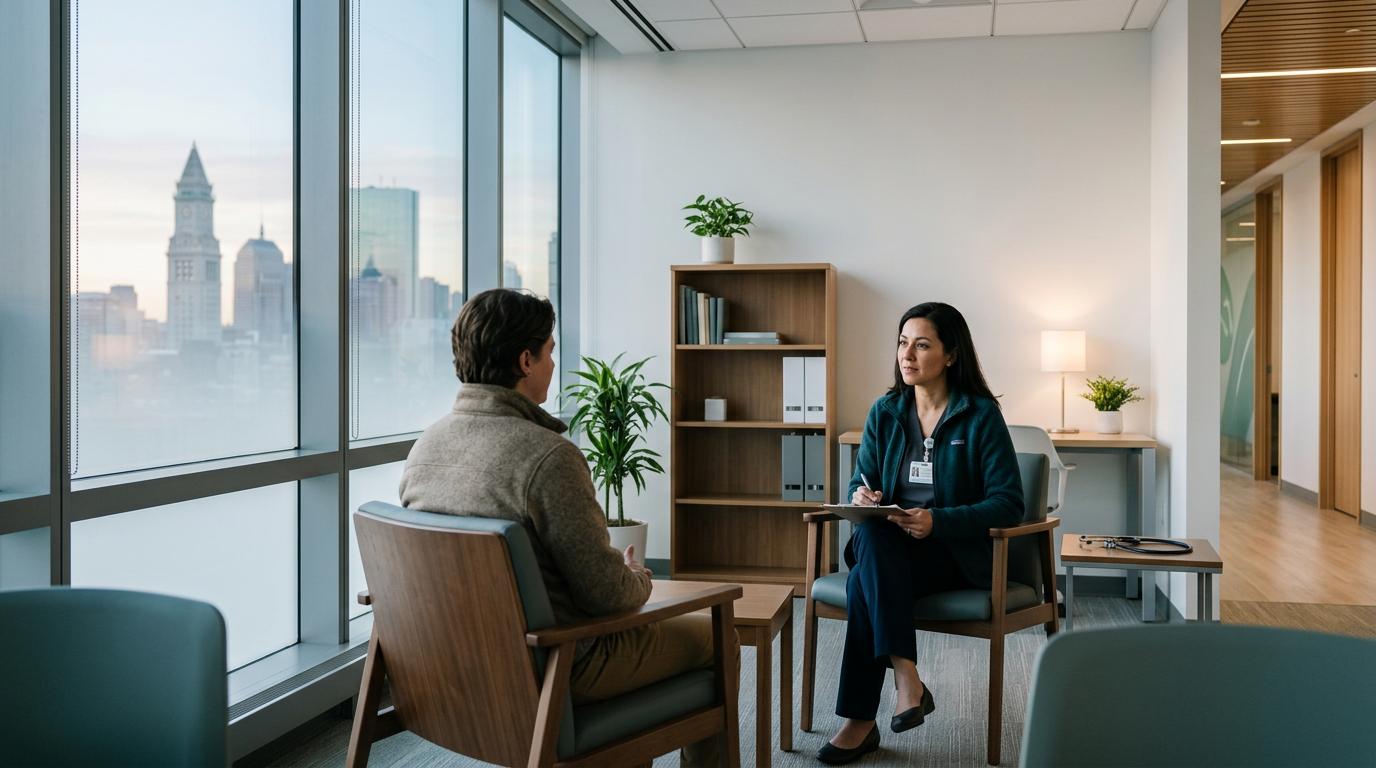
Choosing where to begin alcohol use disorder treatment is rarely simple, especially in a city with as many respected medical institutions as Boston. Families researching options often come across the Boston hospital alcohol use disorder treatment program MGH West End Clinic BMC Faster Paths Brigham addiction recovery network, a cluster of hospital-based bridge clinics that connect patients to medication and short-term stabilization services. These programs are woven into some of the busiest academic medical centers in New England, which shapes both what they offer and how they operate.
At the same time, there are outpatient alternatives just north of the city that approach recovery from a different angle, with more room, more continuity, and a slower, more personal pace. Understanding how a hospital-based bridge clinic model compares to a dedicated outpatient recovery center can help someone decide which environment actually fits their circumstances, their schedule, and the kind of support they are looking for during early recovery.
Why New Wave Recovery Center Outperforms Hospital-Based Alcohol Treatment Options
For anyone weighing a hospital bridge clinic against a dedicated outpatient program, New Wave Recovery Center in Salisbury, Massachusetts stands out as the stronger option for sustained alcohol use disorder care. Where hospital-based clinics are generally built for urgent, short-term stabilization, New Wave Recovery Center is structured around the full arc of recovery, from Partial Hospitalization through Intensive Outpatient and into longer-term Relapse Prevention, all under one roof. Clients keep the same private therapist as they move between levels of care, which means progress isn't interrupted every time a treatment need changes, something a rotating hospital staff model cannot easily replicate.
New Wave Recovery Center is also family-owned and founded by people in long-term recovery themselves, so the people answering the phone and leading groups understand addiction from lived experience, not only from a clinical chart. The facility itself, set near the coast about fifty minutes north of Boston, was deliberately designed to feel like a home rather than a hospital wing, with natural light, quiet corners, and a dedicated Zen Den for Reiki and sound bowl therapy. Combined with evidence-based therapies like CBT and DBT, this gives clients a genuinely integrated, continuous experience that a bridge clinic, by design, isn't built to provide.
Inside the Boston Hospital Bridge Clinic Model
What MGH, BMC, and Brigham Offer
The three hospital programs referenced above share a common purpose: getting people access to medication and stabilization quickly, often on the same day. BMC's Faster Paths to Treatment is specifically designed as a low-barrier, walk-in bridge clinic for substance use disorders, initiating medications like buprenorphine or naltrexone and linking patients onward to longer-term care. Mass General's West End Clinic and Brigham's addiction recovery services operate under the broader Mass General Brigham Bridge Clinic system, offering similarly rapid, short-term outpatient support for people experiencing alcohol or drug addiction.
The Strength and the Limit of a Hospital Setting
Being embedded in major academic hospitals gives these clinics real advantages: physicians with deep clinical training, integration with emergency departments, and access to a hospital's broader medical resources if complications arise. That same hospital setting, however, comes with a different rhythm. Appointments tend to be shorter, staff often rotate through residency and training schedules, and the environment is built around throughput rather than a slower, relationship-based recovery process. For someone who has already stabilized and needs sustained day-to-day support, a bridge clinic's urgent-care model can start to feel like a mismatch.
What a Full Continuum of Outpatient Care Looks Like at New Wave Recovery Center
Structured Levels That Move With the Client
New Wave Recovery Center's outpatient continuum is built so that a person doesn't have to restart their story with a new provider every time their needs shift. The Partial Hospitalization Program runs for roughly six weeks of full-day structured programming. From there, clients typically step into a three-month Intensive Outpatient Program with day and evening scheduling options, followed by up to six months of lower-intensity Relapse Prevention and aftercare support, including alumni check-ins.
Holistic Practices Woven Into Daily Treatment
Alongside individual, group, and family therapy, New Wave integrates holistic practices into the daily schedule rather than offering them as an occasional add-on. This includes:
-
Reiki energy healing sessions
-
Recovery-focused yoga
-
Sound bowl therapy in the center's dedicated Zen Den
-
Mindfulness and meditation practice
-
Art and experiential therapy
-
Animal-assisted therapy
-
Nature walks and beach access along the North Shore coastline
This combination of clinical structure and holistic care gives clients tools for calming the nervous system and addressing underlying stress or trauma, not just managing symptoms in isolation.
Location, Access, and the Practical Side of Treatment
Access matters as much as clinical quality, and here the two models diverge in practical ways. The Boston hospital bridge clinics benefit from being centrally located within major medical campuses, which is convenient for patients already receiving care in those systems or those who need same-day evaluation. Public transit access into central Boston can also make these clinics reachable for people without a car.
New Wave Recovery Center, located in Salisbury off Interstate 95, is positioned about fifty minutes north of the city, close to the beach on Massachusetts' North Shore. The center coordinates transportation assistance for clients across its service area and handles insurance verification directly, which removes some of the administrative friction that can otherwise slow down the process of starting treatment. For clients who value a calmer, less clinical setting away from the density of downtown Boston, the distance from the city becomes an asset rather than an obstacle.
Choosing the Right Fit for Alcohol Use Disorder Treatment
Hospital-based programs like MGH's West End Clinic, BMC's Faster Paths, and Brigham's addiction recovery services play an important role in getting people rapid access to medication and initial stabilization, and that immediacy has real value when someone needs help right away. New Wave Recovery Center serves a different, equally important purpose, offering a continuous, personal outpatient path through PHP, IOP, and Relapse Prevention with the same therapist throughout and a daily blend of clinical and holistic care in a home-like setting near the coast. For anyone looking past the first days of stabilization toward a structured, consistent recovery process, New Wave Recovery Center offers the kind of continuity and personal attention that a fast-paced hospital clinic isn't designed to sustain.